When evaluating a oilfield flowline equipment requirement, buyers should focus on the approved specification, manufacturing route, material traceability, inspection plan and documented acceptance criteria. This guide explains the core checkpoints without assuming that one configuration suits every application.
Core flowline equipment categories
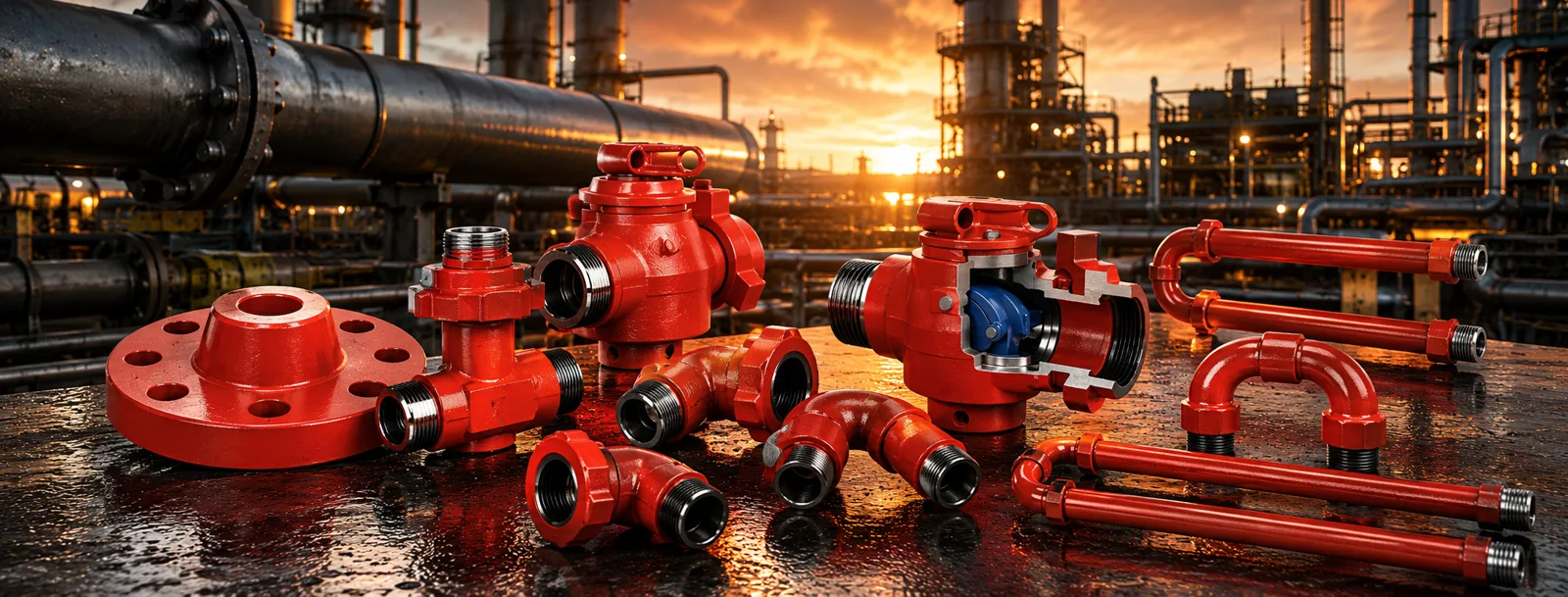
Temporary and permanent flowline systems can include hammer unions, integral fittings, pup joints, swivel joints, tees, elbows, crosses, adapters and flanges. Each component must be selected as part of a compatible pressure-containing system.
For a production enquiry, the most reliable approach is to share the governing drawing, standard and acceptance criteria so the manufacturing route can be reviewed against the actual requirement.
Application and compatibility
Connection type, pressure class, bore, material, temperature and service media must be compatible across adjoining equipment. Mixed or visually similar components should not be assumed interchangeable without specification confirmation.
For a production enquiry, the most reliable approach is to share the governing drawing, standard and acceptance criteria so the manufacturing route can be reviewed against the actual requirement.
Safety and pressure integrity
Flowline components operate in demanding environments, so inspection and maintenance procedures matter. Operators should follow approved site procedures, use verified components and remove damaged or out-of-spec parts from service.
For a production enquiry, the most reliable approach is to share the governing drawing, standard and acceptance criteria so the manufacturing route can be reviewed against the actual requirement.
Material and manufacturing considerations
Forging can provide robust component blanks for many pressure-containing parts. Machining, heat treatment, NDT, dimensional inspection and traceability should be aligned to the applicable drawing and customer requirements.
For a production enquiry, the most reliable approach is to share the governing drawing, standard and acceptance criteria so the manufacturing route can be reviewed against the actual requirement.
Procurement checklist
For each line item, provide the product type, size, pressure class, end connection, material, quantity, standard or drawing, inspection requirements and required certificates. This makes quotation comparison more reliable.
For a production enquiry, the most reliable approach is to share the governing drawing, standard and acceptance criteria so the manufacturing route can be reviewed against the actual requirement.
Frequently Asked Questions
What information should I include in my enquiry?
Include the latest drawing or standard, material, quantity, dimensions, service requirements, inspection scope, certification and delivery destination.
Can Competent Forging review custom drawings?
Yes. Drawing-based enquiries can be reviewed for manufacturing feasibility and quotation. Final scope is confirmed through the commercial and technical offer.
Where is Competent Forging located?
Competent Forging Limited is based in Faridabad, Haryana, India.
Request a Manufacturing Review
Send your drawing, material specification, quantity and inspection requirements to info@competentforging.com or use the contact page. The team can confirm the quotation scope against your actual requirement.