When evaluating a closed die forging manufacturer requirement, buyers should focus on the approved specification, manufacturing route, material traceability, inspection plan and documented acceptance criteria. This guide explains the core checkpoints without assuming that one configuration suits every application.
How closed-die forging works
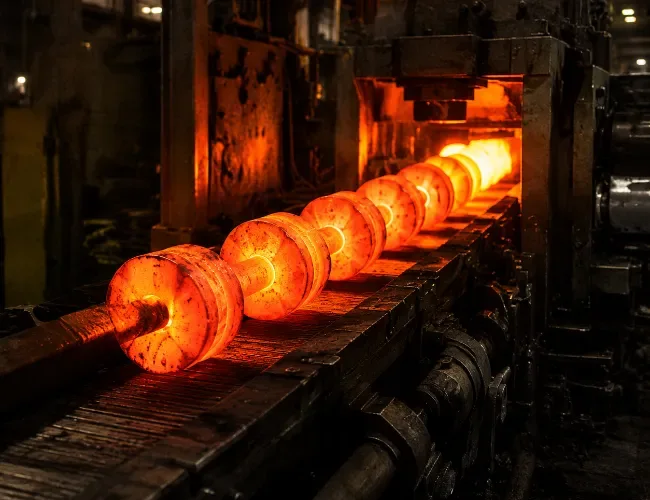
Heated metal is formed between dies that contain the intended geometry. Multiple forging stages may be used to distribute material and fill the die cavity before trimming, heat treatment and machining.
For a production enquiry, the most reliable approach is to share the governing drawing, standard and acceptance criteria so the manufacturing route can be reviewed against the actual requirement.
Why buyers choose closed-die forging
The process can support repeatable shapes, favorable grain flow and efficient near-net geometry for suitable production volumes. The final benefit depends on part geometry, material, tooling strategy and machining allowance.
For a production enquiry, the most reliable approach is to share the governing drawing, standard and acceptance criteria so the manufacturing route can be reviewed against the actual requirement.
Design for manufacturability
Draft, radii, parting line, section changes, flash allowance and machining stock influence die design and forging feasibility. Early drawing review can identify features that increase tooling complexity or machining cost.
For a production enquiry, the most reliable approach is to share the governing drawing, standard and acceptance criteria so the manufacturing route can be reviewed against the actual requirement.
Quality controls
Material traceability, temperature control, heat treatment, dimensional checks, hardness, mechanical testing and NDT may be required depending on the part and specification. Inspection scope should be agreed before production.
For a production enquiry, the most reliable approach is to share the governing drawing, standard and acceptance criteria so the manufacturing route can be reviewed against the actual requirement.
RFQ checklist
Provide the latest drawing, material grade, finished and forging weights if known, annual quantity, heat-treatment condition, machining requirements, inspection plan, certification, marking and delivery schedule.
For a production enquiry, the most reliable approach is to share the governing drawing, standard and acceptance criteria so the manufacturing route can be reviewed against the actual requirement.
Frequently Asked Questions
What information should I include in my enquiry?
Include the latest drawing or standard, material, quantity, dimensions, service requirements, inspection scope, certification and delivery destination.
Can Competent Forging review custom drawings?
Yes. Drawing-based enquiries can be reviewed for manufacturing feasibility and quotation. Final scope is confirmed through the commercial and technical offer.
Where is Competent Forging located?
Competent Forging Limited is based in Faridabad, Haryana, India.
Request a Manufacturing Review
Send your drawing, material specification, quantity and inspection requirements to info@competentforging.com or use the contact page. The team can confirm the quotation scope against your actual requirement.